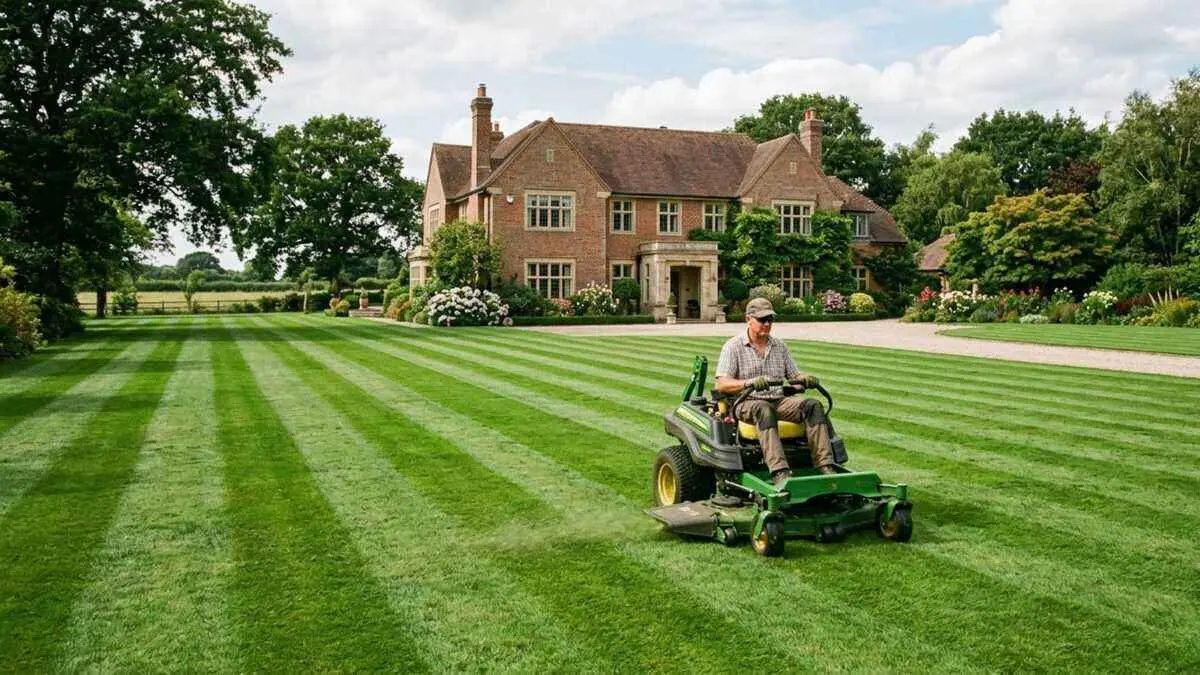
You stood at the back door last Sunday with a mug of tea, admiring your garden as if taking in a fine landscape painting.
The canvas, unfortunately, looks a bit worse for wear: patchy brown spots near the shed, a small moss colony spreading across the north corner, and a tripling dandelion population.
The annoying part is that you do mow. You even bought a decent feed last spring. But somewhere between then and the actual result, something went wrong.
But you don’t need to worry, because this guide will walk you through the basics of getting your lawn back into shape, step by step.
Start With How You Mow
Most lawn problems in the UK begin with the mower, and specifically, with the blade height. Cutting grass too short is the single most common mistake, and the damage adds up fast.
When you scalp the turf down to the soil, you strip away the leaf surface that feeds the root system through photosynthesis.
The roots shrink back, the grass loses its ability to compete with weeds, and bare patches open up for moss to move into. You end up mowing more often to fix a problem that mowing caused in the first place.
To fix this, try raising your cutting height to around 3- 4 cm during the growing season. In summer, you can afford to let it grow a touch longer, especially during dry spells when shorter grass will brown out within days. Just make sure to keep your mower blades sharp.
A dull mower tears the tips of the grass instead of cutting them cleanly, which leaves the lawn looking grey and ragged within a couple of days.
Water Less Often, But Water Properly
A quick daily spritz with the hose might feel satisfying, but it forces the roots to stay right near the surface. When summer cranks up the heat, those exposed roots will dry out instantly, transforming your lawn from deep jade to a scorched, lifeless yellow.
You’ll get far better results from one or two deep soaks per week. A good 20-30 minute session with a sprinkler lets the water sink down into the soil profile, and the roots will follow it.
Deeper roots mean your lawn holds up through dry spells without you having to stand outside every evening with a hosepipe.
Early morning is the best window. Watering in the evening leaves the surface damp overnight, which is an open invitation for fungal diseases, especially during the warmer months across southern England.
Feed at the Right Time of Year
Grass has different nutritional needs depending on the season, and a single bag of generic fertiliser in April will not cover you through to October.
In spring and summer, you’ll want a feed with a higher nitrogen content. Nitrogen drives leaf growth, which is what gives you that dense, green coverage. Apply it when the soil is warm and the grass is actively growing, ideally after a spell of rain so the granules dissolve evenly.
Come autumn, switch to a feed with more potassium and phosphorus. These strengthen the root system and help the grass cope with frost, waterlogging, and the general battering of British winters.
Spreading a summer feed in October will push that soft, vulnerable new growth right into the teeth of the cold, which is the opposite of what you need.
And always follow the dosage on the box. Doubling up will scorch the grass and leave you with yellow burn marks that take weeks to recover from.
Deal With Thatch and Compaction
If your lawn feels spongy underfoot or the grass seems thin despite regular feeding, you’re probably dealing with thatch. Thatch is the layer of dead grass, roots, and organic debris that builds up between the soil surface and the living blades.
A thin layer is normal and even healthy, but once it gets thicker than about 1cm, it’ll block water and nutrients from reaching the soil.
Scarifying in early autumn pulls that dead material out and lets the turf breathe again. You can use a spring-tine rake for a small lawn or hire a powered scarifier for anything bigger.
Your lawn will look rough for a couple of weeks afterwards, but it’ll come back thicker and healthier once it recovers.
If your soil feels like concrete, you’ve got compaction. When the dirt gets stomped flat, it locks out oxygen and stops water from sinking down to the roots where it’s actually needed.
A garden fork pushed in every 10- 15 cm and rocked back gently will open up the soil enough to restore drainage.
For larger gardens, a hollow-tine aerator does the same job more efficiently and pulls out small plugs of soil that you can leave on the surface to break down naturally.
Tackle Weeds and Moss Before They Spread
Weeds and moss spread fast if you give them room, so here’s how to keep them under control:
- Extract taproots entirely. Snapping off weed tops does nothing. Use a weeding tool to leverage the entire root out of the ground.
- Apply herbicide on calm days. Spray broadleaf weeds when it’s dry and still so the treatment sticks to the weed and stays off your garden beds.
- Treat the cause of moss, not just the symptom. Iron sulphate knocks moss back quickly, but moss will just keep returning until you fix poor drainage, soil compaction, and heavy shade.
When to Bring in a Professional
Taking care of routine mowing and summer feeding is simple enough to do on your own. The real headache comes with tasks like deep scarification, soil analysis, overseeding, or treating persistent fungus.
These are much faster—and less stressful—when done with commercial tools and a trained eye.
If you’ve been battling the same patchy, thin lawn for more than a season and nothing seems to stick, a professional lawn care optimisation team will help you identify the root cause and put a proper treatment plan together.
They’ll also have access to commercial-grade equipment and products that make a genuine difference, especially on larger or heavily worn gardens.
It’s also worth considering if your soil has never been tested. A professional analysis will tell you exactly what nutrients are missing and what your pH level looks like, which takes the guesswork out of feeding entirely.
Conclusion
Well done for taking charge of your garden; turning round a worn-out British lawn is no easy feat. Make these few small tweaks, raise your mower blades, and let the grass do the rest.
Come summer, you’ll have neighbours suddenly flocking around, taking very slow, deliberate dog walks past your house just to stare over the fence at your soft, vibrant green grass!