
Jaun Elia was a renowned Pakistani poet, scholar, and philosopher known for his unique style of poetry that captivated readers with its raw emotion and thought-provoking themes.
His words have stood the test of time and continue to resonate with people today. From love and loss to existentialism and social commentary, Elia’s poetry is a reflection of the complexities of life.
In this blog post, we will delve deeper into the world of Jaun Elia poetry, exploring his life, influences, and most beloved works that have made him an iconic figure in the literary world.
The Life of Jaun Elia: A Glimpse into His World
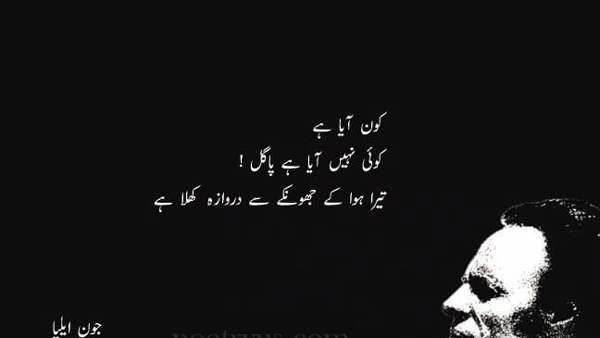
Jaun Elia Poetry: Jaun Elia was born on December 14, 1931, in Amroha, British India, and later moved to Pakistan after the partition in 1947.
Growing up in a literary and knowledgeable family, he was introduced to the world of philosophy, literature, and knowledge at a young age.
This rich intellectual environment profoundly shaped his poetic vision and scholarly pursuits. Elia’s life was marked by his profound knowledge of Arabic, Persian, and Urdu, languages that deeply influenced his work.
Despite facing personal struggles and societal upheavals, his poetry remained a deeply personal and reflective journey, capturing the essence of his turbulent times and inner world.
The Signature Themes in Jaun Elia’s Poetry
Jaun Elia’s poetry is marked by its exploration of themes such as love, existential despair, social injustice, and the human condition. His work often delves into the complexities of personal relationships, unrequited love, and the pain of separation.
Elia’s poetry also reflects his deep engagement with philosophical and existential questions, offering insights into life’s transient nature and the search for meaning.
Additionally, he critically addresses societal norms and politics, showcasing his rebellious spirit. Through his poignant and evocative verses, Elia invites readers into his introspective world, presenting a stark yet beautiful reflection of reality.
The Style and Language of Jaun Elia’s Poetry
Jaun Elia’s poetry is distinguished by its simplicity, yet profound depth. He had the unique ability to convey complex thoughts and emotions through concise and powerful language, making his work accessible to a wide audience.
Elia’s poetic diction was versatile, blending classical Urdu with contemporary idiom and occasionally incorporating Persian and Arabic phrases, enriching his verses’ texture.
His style is characterized by an unpretentious eloquence and a fluidity that draws readers into his emotional landscape.
Elia’s innovative use of traditional poetic forms like the ghazal and free verse allowed him to express a range of moods and thoughts, from somber reflections to sharp wit.
The Influence of Sufism on Jaun Elia’s Work
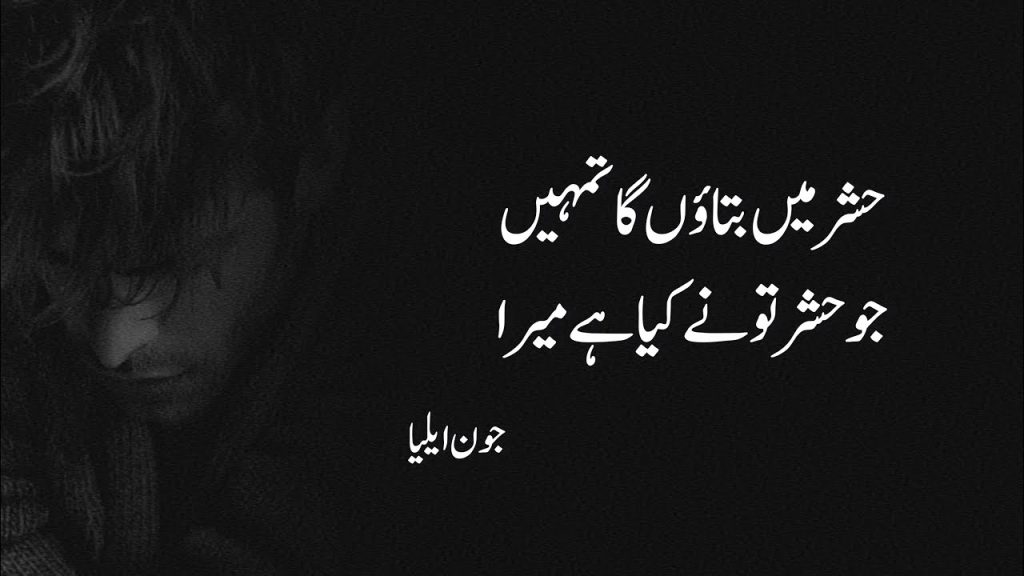
Jaun Elia’s poetry often mirrors the essence of Sufi philosophy, threading the mystical with the mundane.
His fascination with Sufism is evident in his work, where he explores themes of unity, love, and existential quest, characteristics central to Sufi thought.
Elia’s verses reflect a deep yearning for the divine, a hallmark of Sufi poetry, yet he approaches this quest with a questioning spirit, embracing doubt and uncertainty.
This blend of devotion and skepticism underscores the complexity of his relationship with the spiritual, making his exploration of Sufi themes uniquely profound and relatable.
Jaun Elia and the Tradition of Ghazal
Jaun Elia revitalized the ghazal genre with his innovative approach, intertwining traditional motifs with contemporary themes.
His mastery of this form was unparalleled, as he adeptly manipulated its strictures to express profound emotional and philosophical depth.
Elia’s ghazals are a testament to his skill in capturing the essence of human experience, blending the classical with the modern.
Through his work, he expanded the boundaries of the ghazal, inviting a dialogue between the past and the present, and securing his place in the pantheon of great ghazal poets.
The Radical and the Rebel: Political Themes in Elia’s Poetry
Jaun Elia’s poetry was not only a vessel for personal expression but also a powerful tool for social and political commentary.
His verses often carried sharp criticisms of the socio-political issues of his time, reflecting his deep dissatisfaction with the status quo.
Elia’s unwavering commitment to social justice and his disdain for political oppression are evident in his poignant critiques of societal norms and structures.
Through his poetry, Elia positioned himself as a radical voice and a rebel, unafraid to challenge authority and advocate for change, making his work resonate with those who seek to question and reform.
Love and Loss: The Dual Heartbeats of Elia’s Poetry
At the core of Jaun Elia’s poetic universe, love and loss intertwine as central themes, pulsating through his verses with poignant intensity.
His exploration of these themes delves into the depths of human emotion, articulating the exquisite pain of lost love and the haunting void it leaves behind.
Elia’s candid portrayal of love encompasses its fleeting moments of joy and the enduring shadow of loss, capturing the heart’s vulnerability in the face of impermanence.
Through his mastery of language, Elia crafts a resonant dialogue between love’s ephemeral beauty and the inevitable sorrow of separation, striking a chord with readers across generations.
The Legacy of Jaun Elia: Influence on Modern Poetry
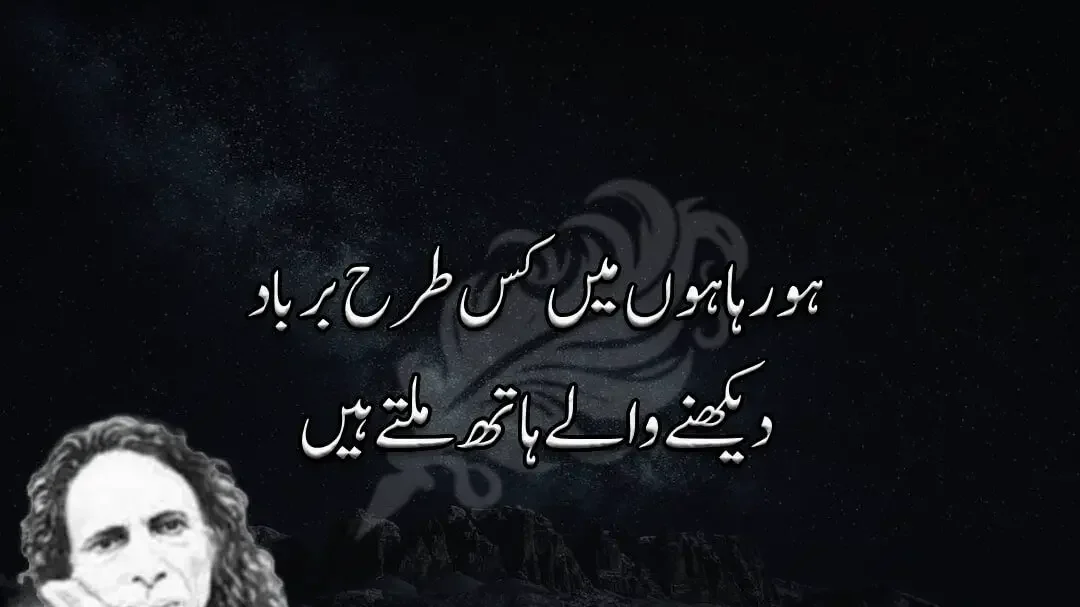
Jaun Elia’s indelible mark on modern poetry transcends geographical and linguistic boundaries, inspiring a new generation of poets and writers.
His innovative use of language, exploration of existential themes, and incorporation of Sufi philosophy into contemporary contexts have opened new avenues for poetic expression.
Modern poets draw from his ability to blend the classical with the modern, adopting his approach to address today’s societal and personal challenges.
Elia’s legacy lives on, not only through his words but in the spirit of rebellion and introspection he championed, encouraging poets to explore the depths of human emotion and the complexities of life in their work.
Exploring Jaun Elia’s Most Beloved Poems
Jaun Elia’s poetic repertoire is replete with works that touch the soul and provoke thought.
Among his most cherished poems, “Shayad” stands out, offering a poignant reflection on the uncertainties of life and love.
“Yeh Hadsa Tha” similarly captures the fleeting nature of existence and relationships.
His mastery is also evident in “Jo Guzar Rahi Hai Mujh Par,” where the introspection and existential inquiry are palpable.
Each of these poems showcases Elia’s exceptional ability to intertwine deep emotional and philosophical insights, making them resonate deeply with readers across the ages.
Accessing Jaun Elia’s Poetry: Translations and Anthologies
For those interested in delving into the world of Jaun Elia’s poetry, numerous anthologies and translations are available that bring his profound Urdu verses to a broader audience.
Collections such as “Shayad,” “Gumaan,” and “Lekin” provide a comprehensive overview of his work, offering insights into his thematic diversity and stylistic depth.
Additionally, select poems have been translated into English and other languages, making Elia’s poignant expressions and philosophical musings accessible to non-Urdu speakers.
These translations and anthologies are essential for anyone looking to explore the depths of Jaun Elia’s poetic genius.
FAQs
Who was Jaun Elia?
Jaun Elia was a notable Pakistani poet, philosopher, and scholar, celebrated for his poignant and evocative Urdu poetry.
What are the main themes of Jaun Elia’s poetry?
His poetry predominantly explores themes of love, existential despair, social injustice, and the philosophical inquiries of life.
How has Sufism influenced Jaun Elia’s work?
Sufism significantly impacted his poetry, weaving themes of divine love, existential quest, and a questioning spirit into his work.
Are Jaun Elia’s poems available in English?
Yes, select poems by Jaun Elia have been translated into English, making his work accessible to non-Urdu speakers.
Why is Jaun Elia considered a revolutionary poet?
Elia is regarded as a revolutionary for his bold critique of societal norms and political oppression, along with his innovative approach to traditional poetic forms.
Conclusion
Jaun Elia’s poetry offers a timeless window into the soul of a man who artfully navigated the complexities of human emotions and societal constructs.
Through his profound verses, Elia invites us into a world where love, loss, and longing intersect with philosophical depth and revolutionary zeal.
His legacy endures, inspiring both readers and poets to explore the depths of their own experiences with honesty and courage.
As we reflect on Elia’s contributions to poetry and thought, it becomes clear that his words will continue to resonate, illuminating the human condition with every line.